 SENSE INSIDER Personal Finance, Smart Investing, Passive Income and Side Hustle & Budgeting Tips
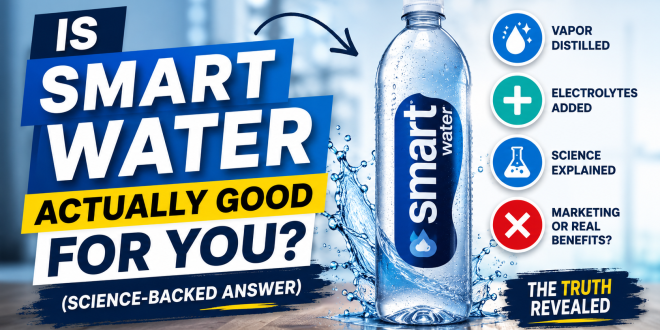
You’ve probably seen it at the gym, at airport checkout counters, and in the hands of celebrities on Instagram. The tall, sleek bottle with the cloud logo has become one of the most recognizable drinks on the market. But here’s the question most people never actually stop to ask: is Smart Water good for you, or is it just really good marketing?
It’s worth finding out, especially when a single bottle can cost two to three times more than a regular bottle of water. If you’re spending extra money on it every day or thinking about making it your go-to hydration source then you deserve a clear, honest answer backed by real science, not just branding language.
In this article, we’re going to break down exactly what Smart Water is, how it’s made, what the research says about its claimed benefits, who it might actually help, and when it’s probably not worth your money. By the end, you’ll know exactly how to answer the question yourself.
What Is Smart Water, Exactly?
Before deciding whether Smart Water is good for you, it helps to understand what you’re actually drinking.
Smart Water is a brand of bottled water owned by The Coca-Cola Company. It was launched in 1996 and markets itself as “vapor-distilled” water with added electrolytes. The key selling points are purity because distillation removes nearly everything from the water and electrolyte enhancement, which the brand claims makes it a superior choice for hydration.
How Smart Water Is Made
The production process starts with local municipal tap water (yes, regular tap water). That water is then put through a vapor distillation process, which essentially mimics the natural water cycle. The water is heated until it evaporates, leaving behind virtually all contaminants, minerals, heavy metals, and impurities. The resulting vapor is then condensed back into liquid form, producing extremely pure water.
After distillation, Smart Water has electrolytes added back in. Specifically, the standard version contains calcium chloride, magnesium chloride, and potassium bicarbonate. These minerals are added in trace amounts primarily for taste, though the brand implies they support hydration.
There are also several product variations, including Smart Water Alkaline (with a pH of 9+), Smart Water Antioxidant (infused with selenium), and Smart Water Sparkling. Each version has a slightly different formulation, but the base distillation process remains the same across the product line.
Is Smart Water Good for You? Here’s What the Science Says
The short answer: Smart Water is safe and hydrating, but it offers no proven health advantages over regular clean tap water or standard bottled water for most people.
That said, context matters, and the full picture is more nuanced.
The Case For Smart Water
Distillation is one of the most thorough water purification methods available. If you live somewhere with water quality concerns such as older pipes, potential heavy metal contamination, or inconsistent municipal treatment then Smart Water’s distillation process does provide a genuinely clean water source. The same is true for travelers in regions where local tap water may be unsafe.
The added electrolytes like calcium, magnesium, and potassium are minerals that play real, documented roles in the body. Calcium supports bone health and nerve function. Magnesium is involved in over 300 enzymatic processes, including muscle and nerve function. Potassium helps regulate fluid balance and heart rhythm. Getting these from any source, including water, is beneficial.
However, and this is the critical point: the amounts of electrolytes in Smart Water are extremely small. An analysis of Smart Water’s mineral content shows electrolyte levels far below what you’d find even in many tap waters, let alone sports drinks or food. The electrolyte content is sufficient to improve the taste profile of distilled water, but it’s not enough to meaningfully impact hydration beyond what plain water already does for a healthy person.
The Concern With Distilled Water as a Daily Driver
Here’s where the “is smart water bad for you” conversation gets real. Distilled water in its pure form is slightly acidic and has what chemists call a high “osmotic pull” — meaning it can actually draw minerals out of your cells and body tissues during digestion. Drinking large quantities of pure distilled water over a long period could, in theory, contribute to mineral depletion.
Smart Water addresses this by adding electrolytes back in, which neutralizes most of this concern. However, the electrolyte levels are so low that if you’re drinking Smart Water as your only source of hydration and eating a poor diet, you may not be getting adequate minerals. For most people eating a balanced diet, this is a non-issue. The minerals you get from food far exceed what any bottled water provides.
The World Health Organization (WHO) has published guidance noting that low-mineral or demineralized water is not considered ideal for long-term regular consumption, primarily because it lacks the trace minerals that naturally sourced water provides. This isn’t specific to Smart Water — it’s a characteristic of all highly purified waters.
Smart Water Benefits: What’s Real and What’s Hype
Let’s be fair. There are genuine situations where Smart Water offers real value.
Benefit 1: Superior Purity for High-Risk Situations
If you’re immunocompromised, pregnant, caring for an infant, or dealing with a compromised local water source, the distillation process offers a level of purity that tap water filtration doesn’t always match. In these cases, the peace of mind alone may justify the cost.
Benefit 2: Better Taste Than Plain Distilled Water
Pure distilled water tastes flat and slightly off to most people, because the minerals that give water its familiar taste are completely absent. Smart Water’s added electrolytes improve this significantly. For people who struggle to drink enough water daily, a better-tasting option is genuinely valuable because consistent hydration beats theoretically superior but untouched water every time.
Benefit 3: Convenient On-the-Go Hydration
The bottle design is practical, widely available, and the product is shelf-stable. For travel, gym sessions, or long workdays, having a reliable, consistent hydration source is a real advantage, even if it’s not nutritionally superior.
Benefit 4: Alkaline Version May Help With Acid Reflux
Smart Water Alkaline, with its pH above 9, has some preliminary research backing it for people with acid reflux (GERD). A 2012 study published in the Annals of Otology, Rhinology & Laryngology found that alkaline water with a pH of 8.8 permanently deactivated pepsin, the enzyme that drives acid reflux damage. This is one area where a specific Smart Water product may offer a functional benefit beyond standard hydration. However, the research is limited and doctors generally recommend dietary changes first.
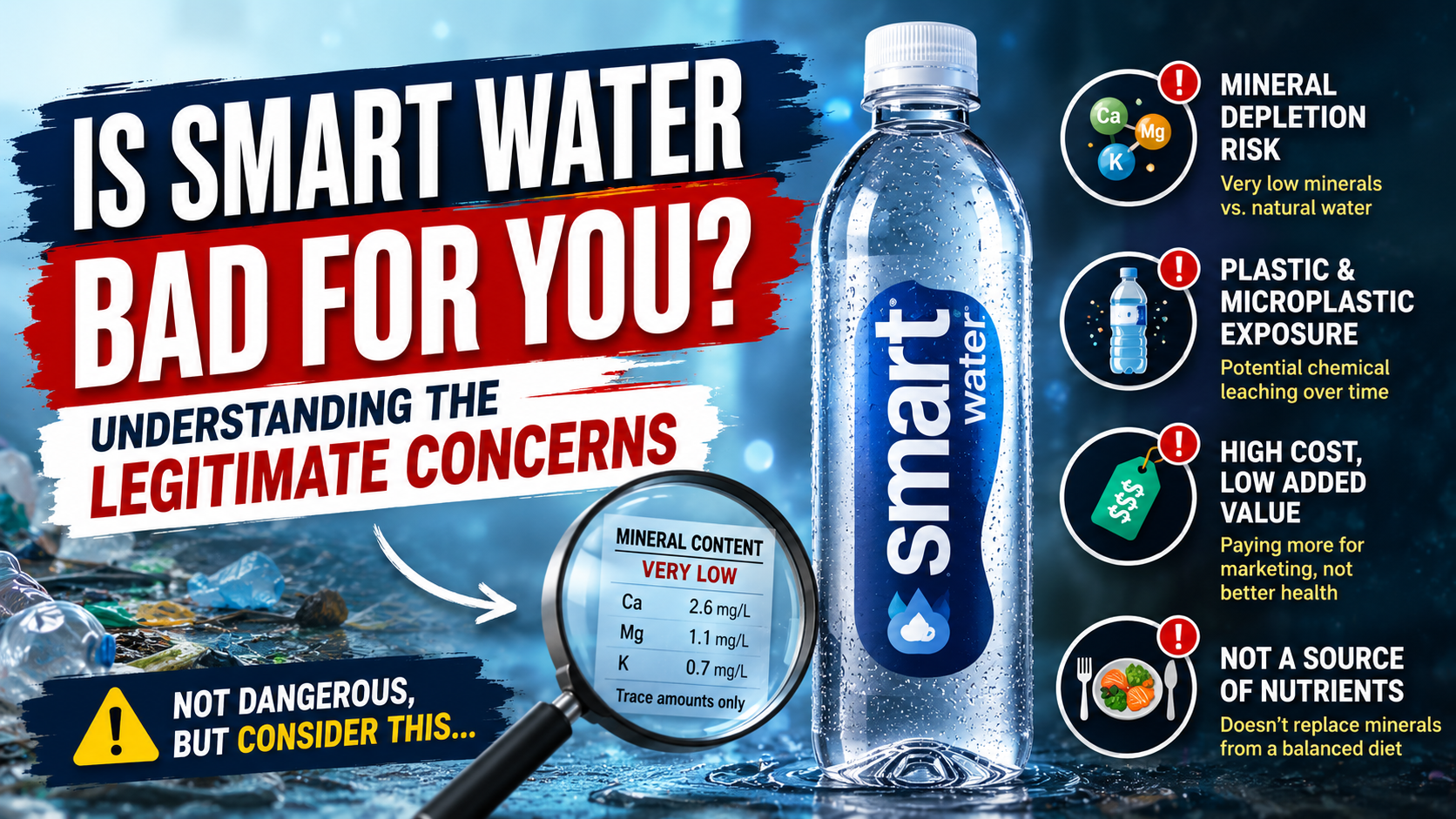
Is Smart Water Bad for You? Understanding the Legitimate Concerns
To be clear, Smart Water is not dangerous for healthy adults drinking it as part of a normal lifestyle. But there are a few considerations worth knowing.
The Mineral Depletion Question
As noted above, the distillation process removes naturally occurring minerals. While the re-added electrolytes partially compensate, Smart Water still provides far fewer trace minerals than most hard tap waters or natural spring waters. If your diet is already mineral-poor, relying exclusively on Smart Water for hydration is not ideal.
Plastic Packaging and Chemical Leaching
Smart Water comes in PET plastic bottles (type 1 plastic), which are generally considered safe for single-use consumption. However, research over the past decade has raised questions about microplastics and trace chemical migration from plastic into water, particularly when bottles are exposed to heat. If you’re refilling Smart Water bottles or leaving them in a hot car, you may be introducing unintended compounds. This is not unique to Smart Water, it applies to all bottled water in plastic.
The Price Tag Problem
Let’s be direct: for most healthy people in the US, UK, Canada, or Australia with access to safe municipal water, Smart Water provides no scientifically supported health advantage that justifies its price premium. You can get equally or more mineral-rich hydration from filtered tap water at a fraction of the cost.
If you’re spending $2–$4 per day on Smart Water as a daily habit, that’s $60–$120 per month, or up to $1,440 per year. Smart budgeting means evaluating whether premium products genuinely serve your needs or whether you’re paying for perception. For practical tips on cutting everyday expenses without sacrificing quality, check out Smart Budgeting & Saving strategies on Sense Insider that show you where small spending habits quietly drain your finances.
Smart Water vs. Regular Water: An Honest Comparison
| Feature | Smart Water | Tap Water (Filtered) | Natural Spring Water |
| Purity | Very high (distilled) | High (filtered) | Moderate to high |
| Mineral content | Very low (trace electrolytes added) | Moderate (varies by region) | Moderate to high |
| Taste | Clean, slightly enhanced | Varies | Often pleasant |
| Cost per day | $2–$4 | Nearly zero | $0.50–$1.50 |
| Best for | Purity concerns, travel | Daily hydration | Mineral intake + taste |
| Environmental impact | High (single-use plastic) | Lowest | Moderate |
For the average healthy adult, filtered tap water wins on nearly every metric except purity in high-contamination scenarios.
Who Should and Shouldn’t Buy Smart Water Regularly
Consider Smart Water If You:
- Live in an area with known water quality issues (lead pipes, agricultural runoff contamination)
- Travel frequently to regions with unreliable tap water
- Are immunocompromised or pregnant and want maximum purity assurance
- Have acid reflux and want to try the alkaline version as a complementary strategy
- Simply find it more enjoyable to drink and it helps you stay consistently hydrated
It’s Probably Not Worth It If You:
- Have access to reliably safe, municipal tap water
- Are buying it primarily because of the health branding
- Use it as a post-workout recovery drink expecting significant electrolyte replacement (it doesn’t have nearly enough for that — use a purpose-built sports drink after intense exercise)
- Are on a tight budget and looking for places to cut back
If you’re evaluating where your money goes each month, it’s worth asking whether premium water is delivering premium results. Building smart financial habits often starts with these kinds of everyday spending audits — something we explore regularly in Personal Finance Basics on Sense Insider.
What Do Doctors and Nutritionists Actually Say?
Most registered dietitians and physicians have a fairly consistent view on Smart Water: it’s a safe, fine choice for hydration, but it’s not a health product with meaningful therapeutic value for most people.
Dr. Howard Murad, a board-certified dermatologist and water health researcher, has noted that adequate hydration from any clean source supports skin health, cognitive function, kidney function, and overall cellular performance. The key word is “clean” not “distilled” or “electrolyte-enhanced.”
The American Council on Exercise recommends that most adults who are not doing intense endurance exercise don’t need electrolyte supplements at all beyond what they get from food. Casual exercise and normal daily activity don’t deplete electrolytes to levels that require targeted replacement via enhanced water.
The bottom line from the clinical community is consistent: for healthy adults, drink enough water from any clean, safe source. Smart Water qualifies as a clean, safe source. Whether it qualifies as worth the premium price is a personal finance question, not a health one.
Frequently Asked Questions About Smart Water
Is Smart Water the same as distilled water?
Smart Water is made using a distillation process, so it starts as distilled water. However, it’s not the same as the distilled water you’d buy at a pharmacy or hardware store. The difference is that Smart Water has electrolytes like calcium chloride, magnesium chloride, and potassium bicarbonate added back in after distillation. Plain distilled water has no minerals at all, which affects both taste and long-term suitability for daily drinking.
Does Smart Water actually hydrate you better?
There is no scientific evidence that Smart Water hydrates you measurably better than clean tap water or regular bottled water for the average person. The electrolyte levels in Smart Water are too low to provide a functional hydration advantage compared to plain water. During intense exercise or significant heat exposure, you’d need a much higher electrolyte concentration such as that found in a sports drink to see a real hydration benefit beyond plain water.
Is it okay to drink Smart Water every day?
Yes, Smart Water is safe for daily consumption by healthy adults. The distillation process removes contaminants effectively, and the added electrolytes address the mineral-depletion concern associated with pure distilled water. That said, it offers no specific health benefit over clean filtered tap water, and the cost adds up significantly over time.
Is the alkaline version of Smart Water better for you?
Smart Water Alkaline has a pH above 9, which some early research suggests may help reduce acid reflux symptoms. For people with GERD, it’s worth discussing with a doctor as a complementary approach. For people without acid reflux or acid-related conditions, there is no well-established benefit to drinking alkaline water over standard pH water.
Why is Smart Water so expensive compared to regular water?
Smart Water’s price reflects the cost of the multi-step vapor distillation process, the brand positioning, and the premium retail distribution. Coca-Cola has invested heavily in building Smart Water into a lifestyle brand. You’re paying for purification technology, consistency of quality, branding, and packaging — not necessarily for superior health outcomes.
The Verdict: Is Smart Water Good for You?
Smart Water is a high-quality, thoroughly purified water that is absolutely safe for regular consumption. The distillation process is legitimate and effective. The added electrolytes improve taste and prevent the mineral-stripping concern associated with pure distilled water. For certain populations like people in areas with water quality concerns, frequent travelers, pregnant women, or those managing acid reflux there are genuine reasons to choose it.
But for the majority of healthy adults in developed countries with access to clean, filtered municipal water, Smart Water does not deliver health benefits that justify its price premium. The marketing language around “electrolytes for taste” and vapor distillation is truthful, but it doesn’t translate into a meaningfully healthier product for most bodies.
The most important thing for your health is staying consistently and adequately hydrated from any clean, safe water source. If Smart Water makes you drink more water because you enjoy it, that’s a genuine benefit. If you’re buying it primarily because the bottle looks impressive or the branding suggests superior health outcomes, your money is working harder for Coca-Cola than it is for you.
Drink water. Drink enough of it. And choose the version that fits your health needs, your taste preferences, and your budget in that order.