 SENSE INSIDER Personal Finance, Smart Investing, Passive Income and Side Hustle & Budgeting Tips
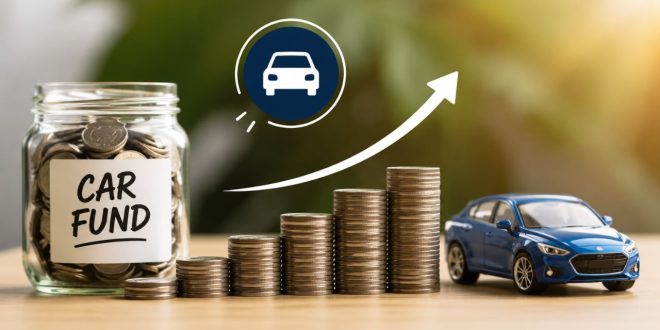
You’ve got your eye on a car. Maybe it’s a reliable used sedan that gets you to work without borrowing someone else’s keys, or a newer model that your current budget makes feel like a distant dream. Either way, you’re asking the right question: how can I save up for a car?
The honest answer is that it’s completely doable but only if you go in with a real plan. Most people either underestimate what they need, try to do it without a structured system, or give up after a few months when progress feels slow. This article walks you through 10 practical, field-tested steps that will get you from “I want a car” to “I have the money” faster than you probably expect. Whether you’re a teenager saving for your first set of wheels, a working adult trying to avoid a car loan, or someone in between, there’s a clear path forward.
Step 1: Figure Out Exactly How Much You Need to Save
Before you save a single dollar, you need a number to aim at. This is where most people go vague — and it costs them.
How Much Should I Save for a Car?
The short answer: aim to pay for your car in full, or at minimum, save enough for a down payment of 20% or more on a financed vehicle.
Here’s a more complete breakdown:
- Buying used outright (most financially smart option): Budget $5,000–$15,000 for a reliable used car, depending on your market and needs. In the US, a dependable used vehicle with under 100,000 miles typically falls in the $8,000–$12,000 range. In the UK, that’s roughly £6,000–£9,000. In Canada and Australia, expect similar ranges in local currency.
- Down payment on a financed car: If you’re financing, a 20% down payment reduces your monthly payments and helps you avoid being “underwater” on the loan. On a $20,000 car, that’s $4,000 upfront.
- Don’t forget the extras: Registration, insurance (often due upfront), taxes, and an emergency maintenance fund of at least $500–$1,000 should be included in your savings target.
So if you’re aiming for a $10,000 used car with $1,000 set aside for fees and maintenance, your real target is $11,000. Write that number down. Vague goals produce vague results.
Step 2: Set a Realistic Timeline and Monthly Savings Target
Once you have your number, divide it by how many months you’re willing to wait. This tells you what you need to save each month.
Example:
- Goal: $11,000
- Timeline: 18 months
- Monthly savings needed: ~$611
If $611 sounds too steep, either extend your timeline or reduce your car budget. The point is to find a number that’s challenging but not impossible.
A useful rule of thumb: never let your monthly car savings exceed 15–20% of your take-home income. That leaves room for bills, food, and unexpected expenses without derailing everything.
Use a simple spreadsheet or a free budgeting app to map this out. Seeing the math clearly is motivating in a way that just “trying to save more” never is.
Step 3: Open a Dedicated Car Savings Account
This one step alone dramatically increases your odds of success — and it takes about 10 minutes.
Open a separate savings account specifically for your car fund. Do not mix it with your emergency fund or general savings. When the money is in its own bucket with its own label — even something as simple as naming it “My Car Fund” — you’re far less likely to dip into it for other things.
Best Account Types for Car Savings
- High-yield savings account (HYSA): These accounts, offered by online banks like Marcus, Ally (US), or Marcus by Goldman Sachs (UK), pay significantly more interest than traditional savings accounts. On $8,000 saved, the difference between a 0.01% rate and a 4.5% rate is hundreds of dollars over 18 months — essentially free money toward your goal.
- Notice accounts (UK/Australia): If you’re in the UK or Australia, a notice account or term deposit can earn higher returns if you won’t need the money for a set period.
The key is liquidity that you want to be able to access the money when you’re ready to buy without penalties.
Step 4: Automate Your Savings So You Never Have to Think About It
Willpower is unreliable. Automation is not.
Set up an automatic transfer from your checking account to your car savings account on the same day each month ideally the day you get paid. Treat it like a bill. When the money moves before you have a chance to spend it, saving becomes the default behavior rather than a conscious decision you have to make every single month.
Start with the amount you calculated in Step 2. If that’s not immediately possible, start smaller and increase the transfer by $25–$50 every time your income goes up or a regular expense drops off.
This “pay yourself first” approach is one of the most widely recommended strategies in personal finance, and for good reason — it works.
Step 5: Build a Budget That Actually Has Room for Car Savings
If you’re not already budgeting, saving for a car is a great reason to start. And if you are budgeting, it may be time for an honest audit.
How to Save Money for a Car Within a Budget
The most effective framework is the 50/30/20 rule:
- 50% of take-home income goes to needs (rent, utilities, groceries, transport)
- 30% goes to wants (dining out, subscriptions, entertainment)
- 20% goes to savings and debt repayment
For an aggressive car savings push, temporarily shift that split to 50/20/30 — cutting wants to 20% and pushing savings to 30%. That’s not forever. It’s a focused sprint toward a specific goal.
Common budget cuts that free up meaningful cash:
- Cancel or pause streaming subscriptions you barely use ($15–$60/month)
- Cook at home 4–5 nights a week instead of ordering in ($100–$200/month)
- Review your phone plan — many people overpay by $30–$50/month
- Drop the gym membership if you can work out for free or cheaper elsewhere
Small cuts compounded over 12–18 months add up to thousands of dollars.
Step 6: Find Ways to Earn More Money and Put It Straight Toward the Car
Cutting expenses has a floor. Earning more has no ceiling.
The fastest way to close the gap between where you are and your savings target is to bring in extra income specifically earmarked for the car fund. Here are some realistic, accessible options:
How to Save Money as a Teenager for a Car
If you’re a teen, your options are more limited but still real. Lawn mowing, babysitting, car washing, tutoring, and selling things on platforms like Facebook Marketplace or eBay can all bring in steady cash. The discipline you build saving for your first car will serve you for the rest of your financial life.
For dedicated earning strategies, check out our guide to side hustles for high schoolers — it covers the highest-earning options that work around school schedules.
For Working Adults
- Pick up overtime hours if your job offers it
- Freelance your existing skills (writing, design, bookkeeping, tutoring)
- Sell unused items around the house — electronics, clothes, furniture
- Gig economy work: food delivery, rideshare driving, task-based platforms like TaskRabbit
- Rent out a parking space, storage room, or spare room if you have one
Even an extra $200–$400/month cuts your timeline significantly. On an $11,000 goal, that’s 2–4 fewer months of waiting.
The rule: any income from these side efforts goes directly into the car savings account before you have a chance to absorb it into general spending.
Step 7: Track Your Progress and Celebrate Milestones
Saving for a big goal over 12–18 months is a psychological marathon. Without visible progress, motivation fades.
Create a simple savings tracker like a chart, a spreadsheet, even a hand-drawn thermometer you fill in each month. Seeing your balance climb from $0 to $2,000 to $5,000 to $9,000 keeps the goal concrete and the momentum going.
Set milestone celebrations at 25%, 50%, and 75% of your goal. These don’t need to cost money — a nice home-cooked dinner, a free day trip, a movie night at home. The point is to acknowledge progress in a way that keeps you motivated for the final stretch.
People who track their savings goals are statistically more likely to reach them. The act of watching the number grow creates a feedback loop that makes you want to save more.
Step 8: Avoid Common Mistakes That Stall Car Savings
Even with the best plan, certain habits and decisions can quietly derail your progress. Here’s what to watch out for:
Mistake 1: Saving Without a Specific Goal
“Saving for a car someday” produces very different results than “saving $11,200 by December.” Be specific.
Mistake 2: Keeping the Money Too Accessible
If your car fund is in the same account as your regular spending, it will get spent. Separate accounts create friction — and friction saves money.
Mistake 3: Ignoring the True Cost of Ownership
A lot of first-time buyers get to their savings target, buy the car, and then get hit by registration, insurance deposits, and first-month costs they didn’t anticipate. Build these into your target from day one.
Mistake 4: Buying Too Much Car
Just because you can stretch to a $15,000 car doesn’t mean you should. A reliable $9,000 car that you own outright costs you less in the long run than a $15,000 car with monthly payments and interest. Resist the temptation to upgrade mid-saving.
Mistake 5: Raiding the Car Fund for Other Emergencies
This is exactly why you need a separate emergency fund before or alongside your car savings. Without one, any unexpected expense — a dental bill, a broken phone, an appliance repair — becomes a temptation to drain your progress.
Step 9: Decide Whether to Buy With Cash or Finance (And Plan Accordingly)
There’s a real debate here, and the right answer depends on your situation.
Paying Cash
Paying cash for a used car means no monthly payments, no interest charges, and full ownership from day one. It’s the financially cleanest option. If you’re saving $8,000–$12,000 for a reliable used car, this is almost always the smartest move.
Financing With a Down Payment
If you need a newer, more reliable car and can’t wait to save the full amount, financing with a large down payment (20% or more) is a reasonable alternative. A bigger down payment means lower monthly payments, less interest paid over the life of the loan, and less risk of going “underwater” on the vehicle.
If you eventually go the financing route, read our detailed breakdown on how to lower your car payment — it covers negotiation tactics, loan term strategies, and refinancing options that can save you hundreds per year.
Regardless of which route you choose, having substantial savings gives you negotiating power at the dealership. Cash buyers and large down payment buyers get better deals. Period.
Step 10: Time Your Purchase Strategically
Once you’ve hit your savings target, don’t just rush to the lot. Timing your car purchase can save you hundreds or even thousands.
Best Times to Buy a Car
- End of month, quarter, or year: Dealerships have sales quotas. Salespeople are more motivated to negotiate in the final days of the month, and especially in December, when annual targets are on the line.
- When new models arrive: Typically August–October in the US, dealers are eager to move older model-year inventory and will discount heavily.
- Weekday afternoons: Less foot traffic means more attention from sales staff and a more relaxed negotiating environment.
- Tax refund season (March–April): Counterintuitively, this is not a great time to buy — demand is high, deals are thinner. Avoid if you can.
For used cars, private sellers often have more flexibility on price than dealerships. Platforms like Facebook Marketplace, Craigslist, CarGurus, Autotrader (US), AutoTrader (UK/Canada/Australia), and Carsales (Australia) give you direct access to private listings where motivated sellers will negotiate.
Always get an independent inspection from a trusted mechanic before buying a used car — spending $100–$150 on an inspection can save you from a $3,000 repair bill down the road.
Frequently Asked Questions
How long does it take to save up for a car?
It depends on your income, expenses, and target price. At $300/month saved, reaching a $9,000 goal takes 30 months. At $600/month, it takes 15 months. The most effective approach is to combine consistent monthly savings with occasional lump sums from tax refunds, bonuses, or side income. Most people who follow a structured plan reach their car savings goal in 12–24 months.
How much should I save before buying a car?
If buying outright, save the full purchase price plus 10–15% extra for taxes, registration, insurance, and an emergency maintenance buffer. If financing, aim for at least a 20% down payment. Putting less than 20% down increases your monthly payment, total interest paid, and the risk of owing more than the car is worth.
How can I save money for a car on a tight income?
Start small and be consistent. Even $50–$100 per month in a dedicated account builds momentum. Focus on cutting one or two specific expenses — subscriptions, takeout, or an underused service — and redirect that money. Add any windfalls (tax refunds, birthday money, overtime pay) directly to the car fund. Over 12–18 months, small consistent amounts compound into real buying power.
Is it better to save up for a car or finance it?
For most people, saving and buying with cash (especially for used cars) is the better long-term financial move. You avoid interest charges, have no monthly obligation, and own the asset outright. However, if you need a reliable vehicle quickly for work and can secure a low-interest loan with a 20%+ down payment, financing can be a reasonable option. The key is never financing more than you can comfortably manage — monthly car payments should stay below 10–15% of take-home pay.
How do teenagers save money for a car?
Teens can save for a car by working part-time jobs, doing neighborhood services (lawn care, babysitting, dog walking), selling unused items, and putting every dollar of birthday and holiday money toward the goal. Opening a teen savings account at a local bank or credit union helps keep the money separate and growing. The most important thing is starting early and being consistent — even $50–$75 a month adds up to $1,800 over two years, which is a real contribution toward a first car.
Conclusion: Your Car Is Closer Than You Think
Saving up for a car doesn’t require a six-figure income or years of sacrifice. What it requires is a clear goal, an honest budget, a separate savings account, and consistent action — month after month, without overthinking it.
Start with Step 1 today: pick your number. Not a range, not a vague idea — a specific dollar amount. From there, everything else follows.
If you cut $200 in monthly expenses, automate $400/month in savings, and add $150/month from a small side hustle, you’re putting $750 toward your car every single month. At that rate, $11,000 is yours in less than 15 months.
The car you want is not out of reach. It’s on a timeline — and that timeline starts the moment you decide to take it seriously.
Ready to take the first step? Bookmark this guide, open a dedicated savings account today, and set up your first automated transfer this week. Future you, keys in hand, will be glad you did.