 SENSE INSIDER Personal Finance, Smart Investing, Passive Income and Side Hustle & Budgeting Tips
You need a car for a week. Maybe you are borrowing a friend’s vehicle while yours is in the shop, picking up a car you just bought and driving it home, or taking a road trip in a rental. Whatever the reason, paying for a full annual policy feels completely unnecessary. That is where one week car insurance comes in.
The problem is, most people do not know it exists. And those who do often end up overpaying or getting the wrong type of coverage for their situation. In this guide, you will learn exactly what one week car insurance is, where to get it, how much it actually costs, and what to watch out for so you do not get caught with a gap in coverage.
What Is One Week Car Insurance?
One week car insurance, sometimes called 7-day car insurance or short term car insurance, is a temporary auto policy that covers you for a set number of days rather than locking you into a six-month or annual contract.
Think of it as daily car insurance stacked into a week-long block. You get the same basic protections as a standard policy, including liability, collision, and comprehensive coverage depending on what you choose, but you only pay for the exact time you need it.
This type of coverage is particularly popular in the UK, where short-term insurers like Dayinsure and Cuvva have made it mainstream. In the US, it is less common but still available through certain specialty providers and workarounds that we will cover shortly. Canada and Australia sit somewhere in the middle, with options that vary by province and state.
Quick answer: One week car insurance is a short-term auto policy lasting 1 to 30 days. It provides the same essential coverage as a standard policy but charges you only for the days you are actually covered. It is legal, widely available, and often cheaper than adding a driver to an existing policy for a short period.
Who Actually Needs 7-Day Temporary Driver Insurance?
Before you start comparing quotes, it is worth understanding whether short-term coverage is genuinely the right tool for your situation. Here are the most common scenarios where one week car insurance makes financial sense.
Borrowing someone else’s car. If a family member or friend is letting you drive their vehicle for a week, their existing policy may or may not cover you depending on who is listed. Temporary driver insurance gives you your own protection without complicating their policy.
Test driving or buying a used car. If you are buying a private sale vehicle and need to drive it home or test it over a few days, you need coverage before you can set up a permanent policy.
Driving a rental beyond what the rental company offers. Rental car insurance from the desk at the airport is expensive and often limited. A short-term personal policy can give you better coverage at a lower price.
Moving vehicles. If you are a car transporter, delivery driver, or someone helping a relative move their car across the country, temporary auto insurance without a full-year commitment is far more practical.
Young or infrequent drivers. If someone in your household only drives occasionally, adding them to a permanent policy can spike the premium significantly. Temporary driver insurance covers them for the specific period they need it.
Seasonal or stored vehicles. Collectors and classic car owners sometimes need brief coverage when they take a vehicle out of storage for a trip or event.
How Much Does One Week Car Insurance Cost?
This is the question everyone wants answered first, and the honest answer is that it depends on several factors. But here is a realistic breakdown to set your expectations.
Typical Cost Ranges by Country
In the United States, genuine single-week policies are harder to find, and most drivers end up paying the equivalent of a prorated monthly rate. Expect to pay anywhere from $40 to $120 for seven days of basic liability coverage, depending on your driving record, location, and the vehicle involved. Higher-risk drivers or those wanting full coverage can see that number climb to $150 or more.
In the United Kingdom, the market is much more developed. A week of temporary car insurance typically runs between £25 and £70, depending on your age, vehicle, and coverage level. Younger drivers under 25 pay considerably more.
In Canada, short-term policies are regulated at the provincial level. Most provinces require a minimum of a monthly commitment, so a true 7-day policy can be difficult to arrange. Costs generally range from CAD $50 to $150 for a week.
In Australia, short-term car insurance is available through providers like InsureDaily. Costs typically start around AUD $30 per day, meaning a week’s coverage runs AUD $150 to $250 on average.
What Affects the Price
Several variables push the price up or down for any short-term policy.
Your age matters a great deal. Drivers under 25 face significantly higher premiums across the board because statistically they are more likely to file a claim. A 19-year-old borrowing a parent’s car for a week will pay more than a 35-year-old in the same scenario.
The vehicle’s value and type also play a role. Insuring a five-year-old sedan for a week is far cheaper than insuring a high-performance sports car or a large truck.
Your driving history is another key factor. A clean record keeps costs low. A DUI or multiple at-fault accidents in the past three years will push premiums up considerably regardless of how short the policy period is.
Finally, your location matters. Urban areas with higher accident rates, higher repair costs, and higher rates of vehicle theft result in higher premiums.
Where to Get One Week Car Insurance in the US
Finding genuine short-term car insurance in the United States is trickier than in the UK, but it is not impossible. Here are the realistic options available to American drivers right now.
Non-Owner Car Insurance
If you do not own a car and need coverage when borrowing or renting vehicles, a non-owner car insurance policy is one of the most cost-effective solutions. It provides liability coverage, meaning it pays for damage you cause to others, but not for damage to the vehicle you are driving. Geico, State Farm, and Progressive all offer non-owner policies, and some can be purchased for as little as 30 days, making them a practical option for week-long needs even if they do not technically qualify as auto insurance without down payment or instant activation for a single day.
Month to Month Car Insurance
Several insurers now offer month to month car insurance with no long-term contract required. While this gives you a full 30 days rather than exactly seven, it is often the most affordable and accessible option for US drivers who need coverage for a short period. You pay for one month, get the coverage you need, and cancel without penalty.
Providers like GEICO, Progressive, and many regional insurers offer monthly-term policies. There is typically no cancellation fee if you end the policy early, though you may not receive a full refund for unused days depending on the insurer.
Peer-to-Peer and Rideshare Platforms
Apps like Turo include insurance as part of their rental model, which means if you are renting someone’s personal vehicle through the platform rather than a traditional company, coverage is often built in. This is not technically personal insurance but it does solve the coverage problem for a week.
Adding Yourself to the Car Owner’s Policy
If you are borrowing a car from a family member or close friend, the simplest and often cheapest solution is to ask them to add you as a temporary listed driver on their existing policy. Most insurers allow this for short periods. Keep in mind this could affect their premium if a claim is made.
Where to Get One Week Car Insurance in the UK
The UK has the most developed market for short-term and temporary driver insurance in the world. Several dedicated providers make it easy to get covered in minutes.
Cuvva is one of the most popular options, offering hourly and daily coverage through a smartphone app. You can insure yourself for exactly the days you need, and payment is taken automatically for the duration you select.
Dayinsure specializes in short-term policies ranging from one day to 28 days. It is particularly popular for people who need temporary cover when driving a car they are about to purchase, or for learner drivers getting extra practice.
Veygo (part of Admiral) also offers flexible short-term cover with competitive pricing for drivers aged 17 and above.
Tempcover works as an aggregator, comparing multiple short-term insurers and showing you the best available rates for your specific situation.
All of these options are fully regulated by the Financial Conduct Authority (FCA) and provide real insurance, not just supplemental cover.
Day Car Insurance: Is Buying Coverage Per Day Smarter?
If you only need a vehicle for a couple of days rather than a full week, day car insurance can be even more cost-effective. In the UK and Australia, per-day coverage is widely available and genuinely priced by the day. In the US, it is harder to find but some specialty insurers and app-based platforms do offer it.
The math on this is straightforward. If a week-long policy costs $90 and a daily policy costs $18 per day, you would break even at exactly five days. For anything shorter, daily coverage wins on price. For a full seven days, the weekly rate usually comes out cheaper.
One thing to be cautious about with per-day pricing is the temptation to underestimate how long you need the vehicle. If your coverage lapses mid-trip and you get into an accident, you are completely uninsured. Always build in a buffer day or two if there is any possibility of your plans running longer than expected.
Auto Insurance Without Down Payment: What You Need to Know
Many drivers searching for one week car insurance are also looking for auto insurance without down payment, meaning they want to avoid putting money down upfront before their first billing cycle. This is a separate concern from the duration of coverage, but the two often come up together.
The good news is that short-term and monthly policies frequently sidestep the down payment issue entirely because you are paying for the full period upfront anyway. When you buy a 7-day policy for $60, there is no down payment because the entire premium for that period is charged when you purchase. There is nothing deferred.
For drivers looking at month to month car insurance as a workaround, some insurers do require a down payment representing the first month’s premium before coverage begins. Others allow you to begin coverage the same day with no additional deposit. Shopping around specifically for “no down payment” policies will help you find insurers who do not require that upfront cost.
For more guidance on managing your car-related costs overall, our guide on how to lower your car payment covers several strategies that work alongside smarter insurance choices.
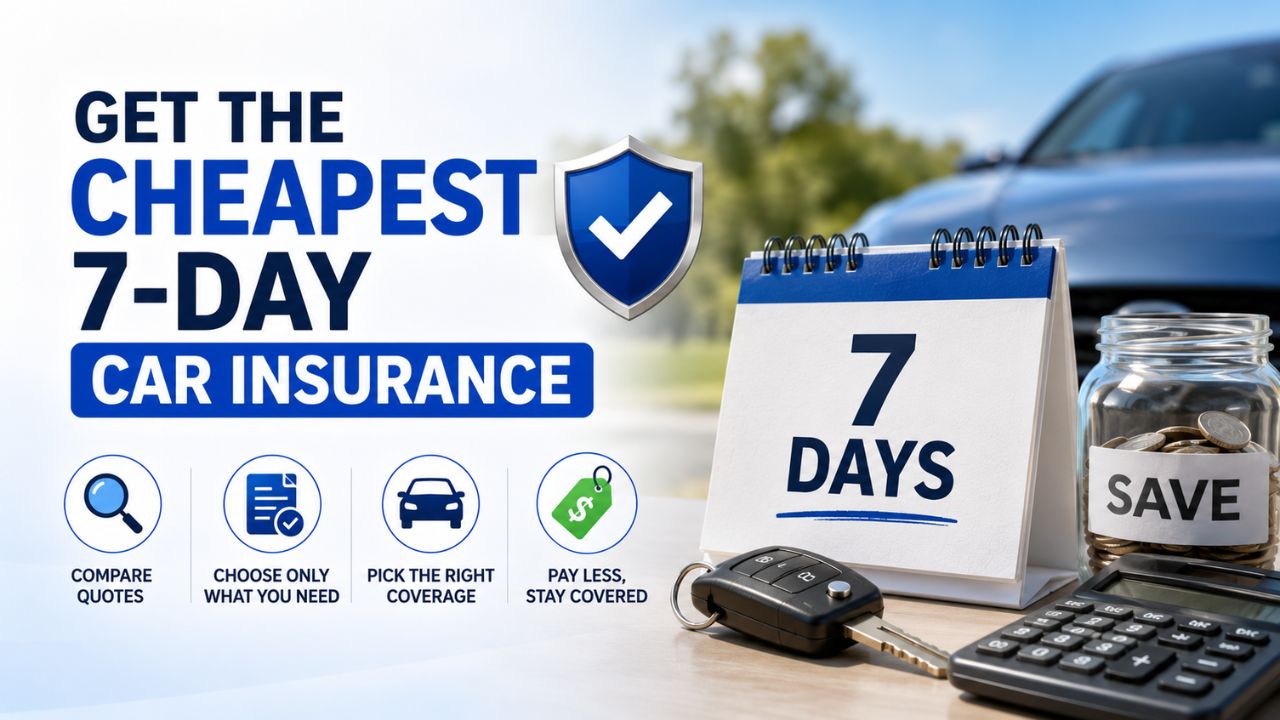
How to Get the Cheapest 7-Day Car Insurance Possible
Getting a good price on temporary coverage comes down to knowing where to look and what to avoid.
Compare multiple providers before you commit. This sounds obvious, but many people grab the first result they find and overpay significantly. In the UK, using a comparison site like Tempcover takes two minutes and can surface options you would never find by searching individual company websites. In the US, calling a few independent insurance agents is often more effective than going direct.
Choose the right coverage level. If you are borrowing a friend’s car for a week and they already have comprehensive coverage on the vehicle, you may only need liability coverage for yourself. This can cut the cost of temporary driver insurance significantly compared to buying a fully comprehensive policy.
Match the duration to your actual need. Do not buy more days than you need, but do not cut it too close either. Buying a 7-day policy when you genuinely only need 5 days wastes money. Buying a 5-day policy when your trip runs to 7 days is a serious risk.
Avoid airport rental desk insurance. If you are renting a car, the insurance offered by the rental company at the desk is almost always significantly overpriced compared to what you can arrange independently through a short-term provider or your own non-owner policy.
Check your credit card benefits. Many travel rewards credit cards include rental car collision insurance as a cardholder benefit. This does not cover liability, but it does cover damage to the rental vehicle, which is typically the most expensive part of rental insurance. Read the terms carefully before relying on this.
Common Mistakes to Avoid With Short-Term Car Insurance
Even drivers who know short-term coverage exists often make avoidable mistakes when buying it.
Assuming you are covered under someone else’s policy. In many jurisdictions, being listed as a driver on someone’s policy is different from being covered to drive their car. Always verify with the insurer before assuming coverage extends to you.
Not reading the exclusions. Short-term policies often have exclusions around vehicle use. A policy covering personal driving may not cover you if you use the vehicle for business purposes, such as making deliveries or visiting client sites.
Buying coverage after you have already started driving. This is both illegal and something insurers actively look for. Always secure coverage before you take the vehicle on the road, not after.
Forgetting about excess or deductibles. Cheap short-term policies often come with high deductibles. A policy that costs you $50 for the week but carries a $2,000 deductible offers limited real protection in the event of a fender bender.
If you are in the middle of shopping around for coverage more broadly, our article on how to switch car insurance walks through how to move between providers cleanly without ending up with a gap in your coverage history.
Frequently Asked Questions About One Week Car Insurance
Can I get one week car insurance the same day I need it?
Yes, in most cases. Both UK providers like Cuvva and Dayinsure and US options through non-owner policies or platform-based solutions can be set up within minutes. The key requirement is that you purchase coverage before driving the vehicle, not after.
Does temporary car insurance affect my no-claims bonus?
In the UK, properly structured temporary driver insurance is purchased as a standalone policy, separate from your main annual policy. This means a claim on the short-term policy does not affect the no-claims discount on your permanent insurance. Always confirm this with your provider before purchasing.
Is one week car insurance legal?
Yes, short-term car insurance is fully legal in the US, UK, Canada, and Australia, provided the policy meets the minimum coverage requirements for your state, province, or country. In the UK, all legitimate short-term insurers are FCA regulated. In the US, minimum liability requirements vary by state.
What is the difference between temporary driver insurance and being added to someone’s policy?
Temporary driver insurance is a standalone policy in your own name. Being added to someone else’s policy as a listed driver makes you an extension of their coverage. The standalone approach is generally better because a claim you make does not directly affect the main policyholder’s premium or claims history. However, it is usually more expensive than simply being added to an existing policy.
Can I get one week car insurance if I have a bad driving record?
It depends on the severity of your record. Minor violations like speeding tickets are often manageable, and short-term insurers will simply charge a higher premium. More serious issues like DUIs, multiple at-fault accidents, or a suspended license may result in denial from standard providers. Specialist high-risk insurers do exist in both the US and UK, but expect to pay considerably more.
Conclusion: Is One Week Car Insurance Worth It?
For the right situation, one week car insurance is not just worth it, it is the smartest financial move available. Paying for seven days of coverage instead of committing to a six-month or annual policy can save you hundreds of dollars or pounds when you genuinely only need a vehicle for a short time.
The key is matching the right product to your specific situation. UK drivers have the widest range of options and the most competitive pricing. US drivers need to be a bit more creative, often through non-owner policies or monthly plans they can cancel quickly. Drivers in Canada and Australia have workable options but may face more limited choices depending on their region.
Whatever your situation, the steps are simple. Figure out exactly how many days of coverage you need, compare at least three providers before committing, verify that the policy meets your state or country’s minimum requirements, and always secure the policy before you get behind the wheel.
If you are managing a longer-term vehicle situation and want to reduce your overall transportation costs, take a look at our guide on how to lower your car payment for practical strategies that work alongside smarter insurance decisions.
Short-term coverage exists precisely because not every driver fits the standard annual policy mold. Use it when it makes sense, understand what you are buying, and you will be covered when it counts.