 SENSE INSIDER Personal Finance, Smart Investing, Passive Income and Side Hustle & Budgeting Tips
You have $100 in your pocket, a laptop on your kitchen table, and a growing suspicion that the traditional 9-to-5 is not the only path forward. Good news: you are right. In 2026, the barriers to starting a business from home have never been lower. According to the U.S. Census Bureau, over 5 million new business applications have been filed every year since 2021, and that trend shows no signs of slowing. Even more encouraging, SBA research shows the average startup cost for a home-based microbusiness is just $3,000 to $5,000, but many service and digital businesses can launch for a fraction of that.
This article is your practical roadmap to the 20 cheapest businesses to start from home in 2026. Every idea on this list can be launched for under $100, requires no fancy office or expensive equipment, and is designed for people who want real results without draining their savings. Whether you are a stay-at-home parent, a college student, a side-hustler looking for extra cash, or someone who is ready to leave their day job behind, these home business suggestions will help you take that critical first step.
Here is what you will learn: which businesses to start, what they actually cost, how to get your first customer, and how to scale once things start rolling. No vague advice. No fluff. Just actionable business ideas 2026 is rewarding.
Why Starting a Home Business in 2026 Is Smarter Than Ever
The landscape for home-based entrepreneurs has fundamentally shifted. Remote work is no longer a pandemic-era experiment. It is the new normal. Digital tools, AI-powered software, and global freelancing platforms have made it possible for a single person working from a spare bedroom to compete with established agencies and service providers.
Here is why the timing matters:
The cost of starting has dropped dramatically. Service businesses now average just $3,000 to $15,000 in total startup costs, with home-based consulting often requiring under $5,000. But many digital and freelance businesses require far less. A laptop, an internet connection, and free online tools are all you need to get rolling.
Consumer spending habits favor home-based businesses. Customers today expect convenience, personalized communication, and seamless online experiences. That plays directly into the hands of solo entrepreneurs who can provide those things faster and more affordably than large companies.
AI is your secret weapon. More than half of U.S. small businesses already use AI in their operations, and over 70% plan deeper integration by 2026. Free and low-cost AI tools allow a one-person operation to produce the output of a small team, from content creation to customer service to data analysis.
82% of small businesses in the U.S. are solo ventures. You are not an outlier for starting something alone from home. You are joining the overwhelming majority of American business owners.
The bottom line: if you have been waiting for the “right time” to start, this is it. The tools are free, the market is hungry, and the cheapest businesses to start are also some of the most profitable.
How We Chose These 20 Business Ideas
Not every business idea deserves your time, energy, or even $100. The ideas for a company on this list were selected using five specific criteria:
1. Startup cost under $100. Every business can launch with nothing more than a laptop, internet access, and a small investment in a domain name, basic supplies, or a starter subscription to a free or low-cost tool.
2. Proven market demand in 2026. We only included business ideas to start that are backed by current consumer spending trends, industry growth data, and real-world success stories.
3. Scalable income potential. Each business can start as a side hustle earning $500 per month and grow to a full-time income of $3,000 to $10,000 or more per month.
4. No specialized degree or certification required. While additional training can help, none of these businesses demand a specific degree to begin.
5. Accessible across the USA, UK, Canada, and Australia. These are globally relevant home business suggestions that work regardless of where you live.
With those criteria locked in, here are the 20 cheapest businesses to start from home in 2026.
Digital and Online Home Businesses (Under $100)
These businesses live entirely on the internet, meaning your only overhead is your time and your WiFi bill.
1. Freelance Writing
If you can string clear sentences together and research a topic thoroughly, freelance writing is one of the lowest-cost business ideas to start in 2026. Companies across every industry struggle to find writers who understand their market and can connect content to measurable outcomes. Writers who specialize in niches like SaaS, finance, health, or B2B marketing position themselves as strategic partners rather than commodity vendors.
Startup cost: $0 to $50 (a free portfolio on Contently or a personal website via WordPress)
Earning potential: $1,000 to $8,000+ per month
How to start: Create three to five writing samples in your chosen niche. Set up profiles on Upwork, Fiverr, or LinkedIn. Pitch five potential clients per day for your first two weeks. Your first client is closer than you think.
2. Social Media Management
Small business owners know they need a social media presence, but most of them have absolutely no time to manage it. That is where you come in. You do not need a marketing degree. You need an eye for what performs well on Instagram, Facebook, TikTok, or LinkedIn, plus the ability to show up consistently.
Startup cost: $0 to $30 (Canva free plan, Buffer free plan, smartphone)
Earning potential: $1,500 to $5,000+ per month (charging $500 to $1,500 per client)
How to start: Manage social media for two or three small local businesses for free or at a deep discount to build your portfolio. Results speak louder than credentials in this space.
3. Virtual Assistant Services
Founders and small teams lose enormous amounts of time on operational tasks like inbox management, scheduling, CRM updates, and travel booking. Virtual assistants who manage defined workflows rather than random one-off tasks retain clients longer and build steadier income streams. This remains one of the most reliable cheapest businesses to start.
Startup cost: $0 to $20 (free project management tools like Trello or Asana)
Earning potential: $1,000 to $5,000+ per month
How to start: Define the three to five specific services you offer (email management, calendar coordination, data entry, customer follow-up). List your services on Belay, Time Etc, or reach out directly to entrepreneurs on LinkedIn.
4. Online Tutoring
Tutoring is a low-investment business idea you can run from home either as a side hustle or a full-time occupation. Whether you teach math, science, English as a second language, test prep, or even musical instruments, parents and students are willing to pay well for personalized instruction. The online tutoring industry continues to expand globally.
Startup cost: $0 to $30 (Zoom free plan, a whiteboard app)
Earning potential: $1,000 to $6,000+ per month ($25 to $80 per hour)
How to start: Pick your subject and age group. Sign up on Wyzant, Tutor.com, or Preply. Ask friends and family to spread the word. If you have already earned a solid grade or hold a skill, you already have enough expertise to start teaching it.
5. Blogging and Niche Content Websites
Starting a blog or niche content website remains a strong long-term business idea. With proper SEO and genuinely valuable content, blogs generate income through display ads, affiliate marketing, sponsored posts, and digital product sales. While results take time, the investment is minimal. You are essentially building a digital asset that earns money while you sleep. If you are looking for side hustles that pay daily, a blog is more of a slow-burn wealth builder, but the ceiling is high.
Startup cost: $30 to $80 (domain name and hosting via Hostinger, Bluehost, or SiteGround)
Earning potential: $500 to $15,000+ per month (once traffic builds)
How to start: Pick a niche you know well and that people actively search for (personal finance, fitness, cooking, travel tips). Write 20 high-quality articles targeting specific long-tail keywords. Monetize with Google AdSense or Mediavine once your traffic grows.
6. Affiliate Marketing
Affiliate marketing is a home business model where you promote a brand’s products or services online. When a customer buys through your unique affiliate link, you earn a commission. You do not handle inventory, shipping, or customer service. You focus entirely on content and traffic.
Startup cost: $30 to $80 (website hosting and domain)
Earning potential: $500 to $10,000+ per month
How to start: Choose a niche, build a simple website or YouTube channel, and join affiliate programs like Amazon Associates, ShareASale, or Impact. Create honest product reviews, comparison guides, and tutorials that help people make purchasing decisions.
Service-Based Home Business Suggestions
Service businesses are the most accessible category of home businesses. They rely on your skills rather than physical assets, which is exactly why they cost almost nothing to launch.
7. Bookkeeping
If you are good with numbers and enjoy organizing financial data, an at-home bookkeeping business is a solid bet. Small businesses need help tracking expenses, invoicing, and preparing for tax season, but they cannot afford a full-time accountant. That gap is your opportunity.
Startup cost: $0 to $50 (free trial of Wave or a low-cost QuickBooks plan)
Earning potential: $2,000 to $7,000+ per month
How to start: Take a free bookkeeping course on Coursera or Khan Academy to sharpen your skills. Offer introductory pricing to two or three small local businesses. As you build a track record, raise your rates. If you are exploring ways to build long-term financial security beyond a day job, consider how income-producing assets can complement your business earnings.
8. Residential Cleaning
The cleaning industry has low entry fees and setup costs, making it accessible to people from all backgrounds and locations. Residential cleaning involves working in a client’s home, handling kitchens, bathrooms, and living spaces. You supply your own basic equipment and cleaning products, and the licensing requirements are minimal in most areas.
Startup cost: $50 to $100 (basic cleaning supplies from a dollar store)
Earning potential: $2,000 to $6,000+ per month
How to start: Start with friends, family, and neighbors. Ask for reviews after every job. Post your services on Nextdoor, Facebook Marketplace, and local community boards. Once you have five happy clients, word of mouth becomes your most powerful marketing tool.
9. Pet Sitting and Dog Walking
If you love animals, this is the perfect gig. You can start a pet business watching people’s pets while they are away or taking their dogs for daily walks. Apps like Rover and Wag make it simple to find your first clients, and then you build your own client base through word of mouth.
Startup cost: $0 to $25 (leash, waste bags, treats)
Earning potential: $1,000 to $4,000+ per month
How to start: Create a profile on Rover or Wag. Set competitive rates for your first month to build reviews. Expand into overnight sitting and drop-in visits as demand grows.
10. Personal Training and Fitness Coaching
Personal training is estimated to be a nearly $12 billion industry. With a relevant certification (which is optional for getting started with general fitness coaching, though recommended) and social media as your primary marketing channel, you can build a thriving client base from your living room. Offer virtual sessions, create custom workout plans, and use Instagram or TikTok to showcase client transformations.
Startup cost: $0 to $50 (Zoom, free workout planning apps)
Earning potential: $2,000 to $8,000+ per month
How to start: Film short workout demonstrations for Instagram Reels or TikTok. Offer free 15-minute consultations to build trust. Package your services into monthly coaching plans for recurring revenue.
11. Home-Based Childcare or Babysitting
A reliable day care or babysitting service is a perennial home business idea. If you are good with children, assess how many childcare options exist in your area. If there is demand, start small with one or two families and grow through referrals.
Startup cost: $50 to $100 (basic toys, art supplies, snacks)
Earning potential: $1,500 to $5,000+ per month
How to start: Research your area’s home childcare regulations. Start by offering services to families in your immediate community. Build trust through consistency and communication with parents.
Creative and Skill-Based Business Ideas 2026
These businesses turn your existing talents into income streams. If you can create, design, or teach something, there is almost certainly someone willing to pay for it.
12. Graphic Design Services
Every business needs visuals, whether it is logos, social media graphics, product packaging, or presentations. With free tools like Canva, and affordable options like Affinity Designer, you do not need expensive Adobe subscriptions to produce professional-quality work.
Startup cost: $0 to $50 (Canva free plan or Affinity Designer one-time purchase)
Earning potential: $1,500 to $7,000+ per month
How to start: Build a portfolio of 8 to 10 sample designs. Post your work on Dribbble, Behance, and Instagram. Offer logo design packages to local startups and small businesses.
13. Print-on-Demand Business
Print-on-demand is ideal for creative entrepreneurs. You design graphics for items like t-shirts, hoodies, mugs, phone cases, or notebooks, and products are printed and shipped only when a customer places an order. There is no need to maintain inventory, making the investment extremely low.
Startup cost: $0 to $30 (free account on Printful, Printify, or Redbubble)
Earning potential: $500 to $5,000+ per month
How to start: Create 20 to 30 designs targeting a specific niche audience (dog lovers, nurses, gamers, teachers). Upload them to Etsy or your own Shopify store connected to a print-on-demand provider. Promote through Pinterest and Instagram.
14. Photography Services
If you own a smartphone with a decent camera (most modern phones qualify), you can start offering photography services locally. Real estate agents, restaurants, small businesses, and families all need quality photos. Specialty niches like pet photography, product photography for e-commerce, and social media content creation are growing fast.
Startup cost: $0 to $50 (phone you already own, free editing apps like Snapseed or Lightroom mobile)
Earning potential: $1,000 to $6,000+ per month
How to start: Photograph a few portfolio-worthy shots for free (a friend’s pet, a local restaurant’s dishes, a family session). Share the results on Instagram and Google Business Profile. Quality speaks for itself.
15. Handmade Crafts and Etsy Shop
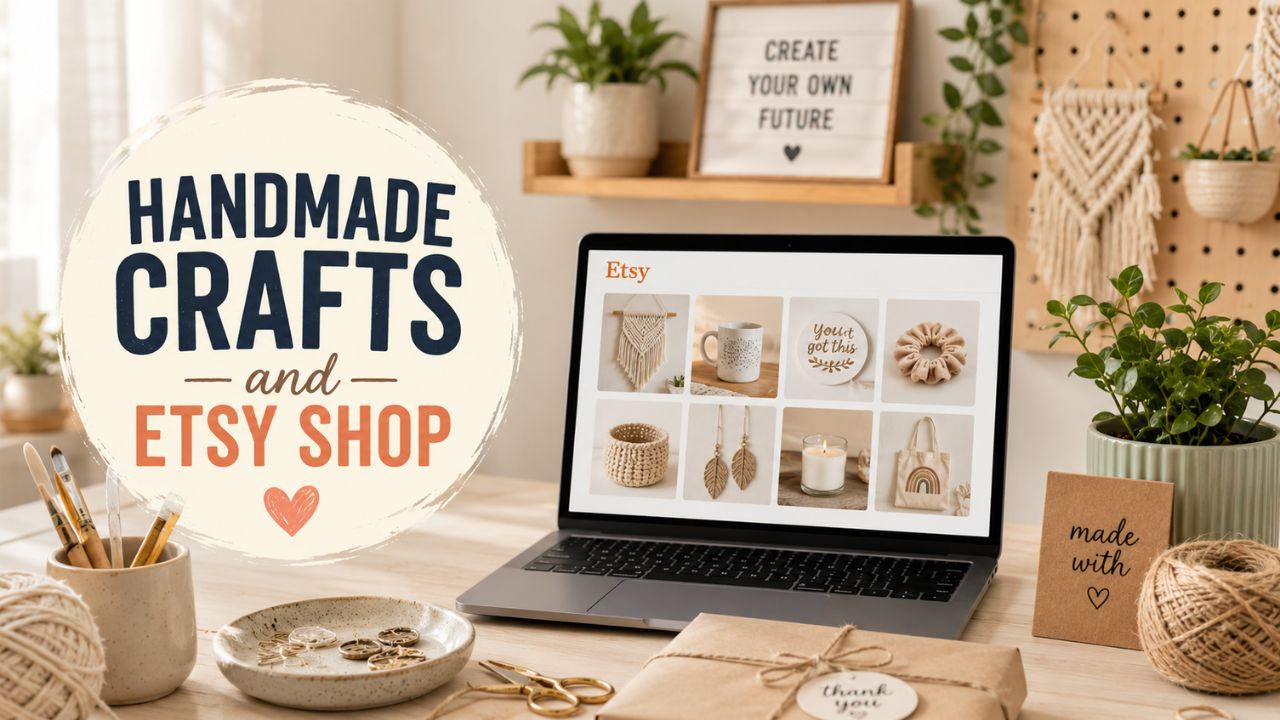
If you are skilled at making jewelry, candles, soaps, pottery, knitted goods, or custom art, platforms like Etsy give you immediate access to millions of buyers. Handmade products have strong appeal because customers are seeking unique, personalized items they cannot find at big-box retailers.
Startup cost: $20 to $100 (raw materials, Etsy listing fee of $0.20 per item)
Earning potential: $500 to $8,000+ per month
How to start: Create 10 to 15 products and photograph them beautifully. Open an Etsy shop. Use relevant keywords in your titles and descriptions. Share your creations on Pinterest, Instagram, and TikTok for organic traffic.
Tech-Savvy Cheapest Businesses to Start
You do not need to be a coding genius to start a tech-related business. Many of these ideas leverage free tools and no-code platforms.
16. Website Design
Every business needs a good-looking, easy-to-use website, and you can be the person who builds it. You can learn to create professional sites using platforms like WordPress, Squarespace, or Shopify. Focus on making websites that are fast, mobile-friendly, and simple for customers to navigate.
Startup cost: $0 to $50 (free WordPress theme, free tutorials on YouTube)
Earning potential: $2,000 to $10,000+ per month ($500 to $3,000 per website)
How to start: Build three sample websites (even fictional businesses count) and use them as your portfolio. Approach small local businesses that have outdated or nonexistent websites. Offer a launch price to get your first few clients and testimonials.
17. SEO Consulting
Businesses need website traffic, and most of them have no idea how search engine optimization works. If you invest a few weeks learning SEO fundamentals through free resources (Google’s own SEO Starter Guide, Moz Academy, Ahrefs blog), you can offer audits, keyword research, and content strategy services to small businesses.
Startup cost: $0 to $50 (free SEO tools like Google Search Console, Ubersuggest free plan)
Earning potential: $2,000 to $10,000+ per month
How to start: Audit a few local business websites for free and present your findings. Show them what they are missing in search rankings. This “free audit” strategy converts prospects into paying clients at a surprisingly high rate.
18. AI Consulting and Setup Services
With AI tools becoming mainstream in 2026, small businesses want to leverage AI to improve efficiency, decision-making, and customer experience, but most do not know where to begin. If you understand how to use tools like ChatGPT, Jasper, Zapier AI, or other automation platforms, you can charge businesses to set up workflows, create chatbots, or optimize their operations using AI.
Startup cost: $0 to $50 (free tiers of AI tools)
Earning potential: $2,000 to $10,000+ per month
How to start: Learn two or three AI tools deeply. Create case studies showing how you streamlined a process or saved time. Offer free demos to local businesses. Spending on AI, cybersecurity, and cloud services is expected to grow significantly in 2026, so demand is only increasing.
Product-Based Home Business Ideas (Still Under $100)
Yes, even product businesses can be launched on a shoestring budget if you are smart about it.
19. Dropshipping
If you are looking for remote business opportunities with low risk, dropshipping is one of the strongest choices. It is an e-commerce model that allows you to sell products to customers without holding any inventory. When a customer orders, the supplier ships directly to them. You never touch the product.
Startup cost: $30 to $100 (Shopify trial, domain name, free supplier connections through DSers or Spocket)
Earning potential: $1,000 to $10,000+ per month
How to start: Research trending product niches (eco-friendly products, tech accessories, pet supplies). Set up a clean Shopify store. Connect with reliable suppliers. Drive traffic through TikTok organic content and Facebook ads with a small testing budget.
20. Reselling and Thrift Flipping
Reselling involves buying low-cost items from thrift stores, clearance sales, garage sales, or online marketplaces and reselling them for profit. Popular categories include clothing, books, electronics, collectibles, vintage items, and home decor. You can start with whatever spare cash you have and scale as profits roll in. If you want to make $50 a day, reselling is one of the fastest paths to consistent daily income.
Startup cost: $20 to $100 (initial inventory from thrift stores or clearance racks)
Earning potential: $1,000 to $5,000+ per month
How to start: Visit thrift stores and clearance sections at major retailers. Look for brand-name clothing, vintage items, or electronics priced well below market value. List them on eBay, Poshmark, Mercari, or Facebook Marketplace. Reinvest your profits into better inventory.
How to Choose the Right Cheapest Business to Start from Home
With 20 solid options in front of you, the natural question is: which one should I pick? Here is a simple framework:
Match your skills to the opportunity. The most successful home businesses are built on skills you already have, not skills you need to learn from scratch. Can you write? Start freelance writing. Are you organized and detail-oriented? Become a virtual assistant or bookkeeper. Do you love animals? Launch a pet sitting service. Skill alignment reduces your learning curve and speeds up your time to the first dollar.
Validate demand before you invest. Before you buy a domain name or print business cards, confirm that people are actually willing to pay for what you want to offer. Talk to potential customers. Search for competitors offering similar services. Look at Google Trends for your niche. If other people are already making money doing it, that is a good sign, not a bad one.
Start with one service, one type of customer, and one area. Trying to be everything to everyone is the fastest way to burn out and earn nothing. Focus creates clarity, and clarity builds confidence.
Think about recurring revenue. Businesses that lock in monthly clients, such as social media management, bookkeeping, virtual assistant services, or cleaning, provide more predictable income than one-off gigs. Predictability reduces stress and allows you to plan for growth.
Consider your lifestyle. Some of these businesses (like pet sitting or cleaning) require you to be physically present. Others (like freelance writing or affiliate marketing) can be done from anywhere with an internet connection. Choose a model that fits the life you actually want to live.
Mistakes to Avoid When Starting a Home Business on a Budget
Starting cheap does not mean starting careless. Here are the biggest pitfalls to avoid:
Spending money before earning money. Do not buy a premium website theme, a fancy logo, or expensive software until you have your first paying client. Free tools are more than good enough to get started. Invest from revenue, not from savings.
Skipping the legal basics. Even a $0-to-launch business needs a basic legal structure. Register your business name. Look into whether you need a local business license. Separate your business and personal bank accounts from day one. In the U.S., many states allow you to form an LLC for under $100, and the IRS allows businesses to deduct up to $5,000 in startup costs in their first year.
Undercharging because you are new. Your first clients might get a slight discount, but do not work for pennies. Research what competitors charge and price yourself competitively. Undercharging attracts clients who do not value your work, and it sets expectations that are difficult to raise later.
Not tracking your finances. Use free accounting software like Wave from day one. Track every dollar in and every dollar out. This habit pays for itself at tax time and gives you a clear picture of whether your business is actually profitable.
Trying to scale before you have product-market fit. Get five happy, paying clients before you start thinking about hiring, automating, or expanding. Those first five clients teach you more about your business than any course or blog post ever will.
Frequently Asked Questions
What is the absolute cheapest business to start from home?
Freelance writing, virtual assistant services, and social media management are the cheapest businesses to start from home because they require zero upfront investment beyond a laptop and internet connection. You are selling your time and skills, not physical products. You can land your first client within a week using free platforms like LinkedIn, Upwork, or even cold outreach via email.
Can I really start a business with less than $100?
Yes, absolutely. The majority of service-based and digital businesses on this list can launch for under $100. Many can launch for $0 if you already own a computer and have internet access. SBA research confirms that the average startup cost for a home-based microbusiness is $3,000 to $5,000, but that figure includes businesses that buy equipment and software they do not strictly need from day one. If you start lean and invest from revenue, $100 is more than enough.
How long does it take to make money with a home business?
It depends on the business model. Service-based businesses like cleaning, tutoring, pet sitting, and virtual assistance can generate income within the first one to two weeks if you actively market yourself. Content-based businesses like blogging and affiliate marketing typically take three to six months to gain traction. The key variable is not the business type. It is how quickly and consistently you take action.
Do I need to register my home business?
In most cases, yes. Regulations vary by country and by state or province, but at minimum, you should register your business name, check local zoning laws for home businesses, and look into whether you need a business license. In the U.S., forming a sole proprietorship is free (you just start operating), while an LLC costs $50 to $500 depending on your state. In the UK, registering as a sole trader with HMRC is free. In Canada and Australia, business registration is similarly straightforward and low-cost.
Which home business has the highest earning potential?
SEO consulting, AI consulting, website design, and freelance writing (especially in specialized niches) tend to have the highest earning ceilings among low-cost home businesses. Experienced professionals in these fields regularly earn $5,000 to $15,000 or more per month while working from home. The key differentiator is specialization. A generalist writer earns decent money, but a writer who specializes in SaaS product descriptions or a web designer who focuses on law firm websites can charge two to three times the market average.
Your Next Step: Pick One and Start This Week
You have just read through 20 of the cheapest businesses to start from home in 2026. Every single one of them can be launched for under $100. The information gap is closed. Now, the only variable left is action.
Here is what to do right now:
1. Scroll back through the list and circle the two or three ideas that match your existing skills.
2. Pick the one that excites you the most.
3. Spend the next 48 hours setting up the bare minimum: a profile, a portfolio, a list of five potential clients, or a simple website.
4. Reach out to your first prospect before the end of the week.
You do not need a perfect plan. You do not need permission. You do not need to spend months “preparing.” The entrepreneurs who succeed are not the ones with the best ideas. They are the ones who start this week and improve every day.
Your home. Your schedule. Your business. Go build it.